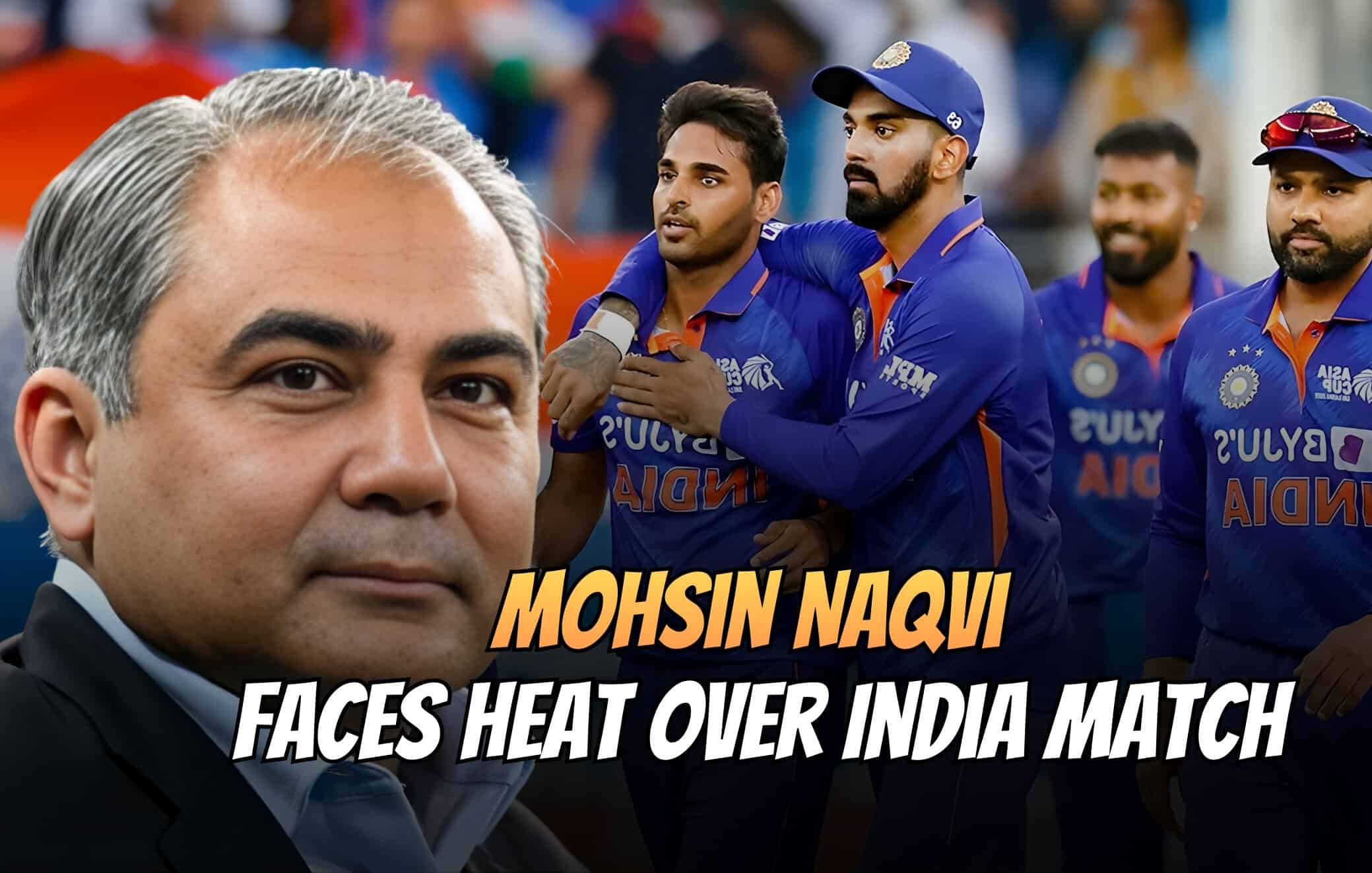
PCB U-Turn dominated headlines after Pakistan Cricket Board chairman Mohsin Naqvi was confronted over Pakistan’s sudden reversal on boycotting the high-voltage T20 World Cup clash against India. The episode unfolded publicly just hours before Pakistan officially confirmed it would take the field on February 15, ending days of uncertainty and political drama around the tournament’s marquee fixture.The PCB U-turn came after intense negotiations involving the ICC, Pakistan, Bangladesh, and several other cricket boards, exposing the mounting pressure on Pakistan to honour its commitments under ICC regulations.
PCB U-Turn Explained: Why Pakistan Changed Its Stance
The PCB U-turn traces back to Pakistan’s initial decision to boycott the T20 World Cup group match against India. The Pakistan government had barred the national team from playing the fixture as a gesture of solidarity with Bangladesh, who were removed from the tournament after refusing to play their matches in India due to security concerns.
As the standoff escalated, the PCB demanded concessions from the ICC, including the resumption of bilateral cricket with India and alternative tournament arrangements. However, none of these demands were accepted, placing Pakistan in a difficult position as the global cricket calendar moved forward.
The PCB U-turn ultimately reflected a recognition that continued resistance could invite serious sporting and financial consequences.
Mohsin Naqvi Under Fire at PSL Press Conference
The turning point in the PCB U-turn saga came during a Pakistan Super League press conference, where PCB chief Mohsin Naqvi was directly questioned about the board’s boycott stance. The atmosphere turned tense as reporters pressed him for clarity amid growing speculation that Pakistan was about to reverse its decision.
Following the conference, Naqvi was confronted again by an interviewer seeking “inside details” of the negotiations. His responses, though cautious, strongly hinted at the impending PCB U-turn.
“Bas ab thodi der mein faisla ho jayega,” Naqvi said, suggesting that a decision was imminent. When asked whether Pakistan had secured any gains from talks with the ICC, his reply was blunt: “Apne liye kuch nahi kiya” — a clear admission that the PCB U-turn was not backed by concessions for Pakistan.
Bangladesh Factor Behind the PCB U-Turn
A key element driving the PCB U-turn was Bangladesh’s own position. Naqvi publicly stated that Bangladesh had requested Pakistan to play the India match, indicating that Dhaka’s concerns had been addressed through dialogue with the ICC.
According to Naqvi, Pakistan’s initial boycott was never about self-interest but about taking a stand for Bangladesh. Once Bangladesh signalled that it wanted Pakistan to proceed with the fixture, the moral basis for the boycott weakened significantly.
This shift placed additional pressure on the PCB to reverse course, reinforcing the inevitability of the PCB U-turn.
ICC’s Firm Stand Forces PCB U-Turn
The ICC played a decisive role in triggering the PCB U-turn. After weeks of discussions, the governing body made it clear that all members were expected to respect their participation agreements.
In its official statement, the ICC emphasised unity and commitment to the tournament, stressing that no member could selectively opt out of fixtures. Crucially, the ICC rejected all three demands reportedly made by the PCB, including the long-standing request to resume bilateral cricket with India.
With no leverage left and the tournament already underway, the PCB U-turn became the only viable option.
Political Pressure and International Concerns
Beyond cricketing considerations, the PCB U-turn was influenced by diplomatic and financial realities. Other cricket boards, including those from Sri Lanka and the UAE, expressed concerns about the broader impact of a Pakistan-India boycott on the tournament’s commercial value.
The India-Pakistan match is widely regarded as the financial backbone of ICC events, and its cancellation could have triggered losses across the cricketing ecosystem. These concerns were reportedly conveyed to Pakistan’s leadership, further narrowing the PCB’s options.
Pakistan to Face India on February 15
Following the PCB U-turn, it was confirmed that Pakistan will face India in their scheduled T20 World Cup group match on February 15. The decision brought an end to nearly ten days of uncertainty and restored stability to the tournament schedule.
For fans, broadcasters, and sponsors, the PCB U-turn ensures that the tournament’s biggest rivalry remains intact. For the PCB, however, the episode has raised questions about governance, decision-making, and the balance between political positioning and sporting obligations.
Fallout of the PCB U-Turn
While the PCB U-turn resolved the immediate crisis, it left Pakistan empty-handed in negotiations. No concessions were secured, and the long-standing issue of bilateral cricket with India remains unresolved.
Mohsin Naqvi’s candid admission that Pakistan gained nothing for itself underscored the reality that the boycott strategy ultimately failed to achieve its objectives.
Looking Ahead After the PCB U-Turn
The PCB U-turn serves as a reminder of the limits of unilateral action within international cricket. As ICC events become increasingly interconnected commercially and politically, member boards face growing pressure to align with collective decisions.
For Pakistan, the focus now shifts back to on-field performance, while administrators will need to reflect on how future disputes are handled to avoid similar public reversals. May have ended the standoff, but its implications for Pakistan cricket are likely to linger well beyond February 15.
🔗 Visit our other platforms:
8jjSports.com