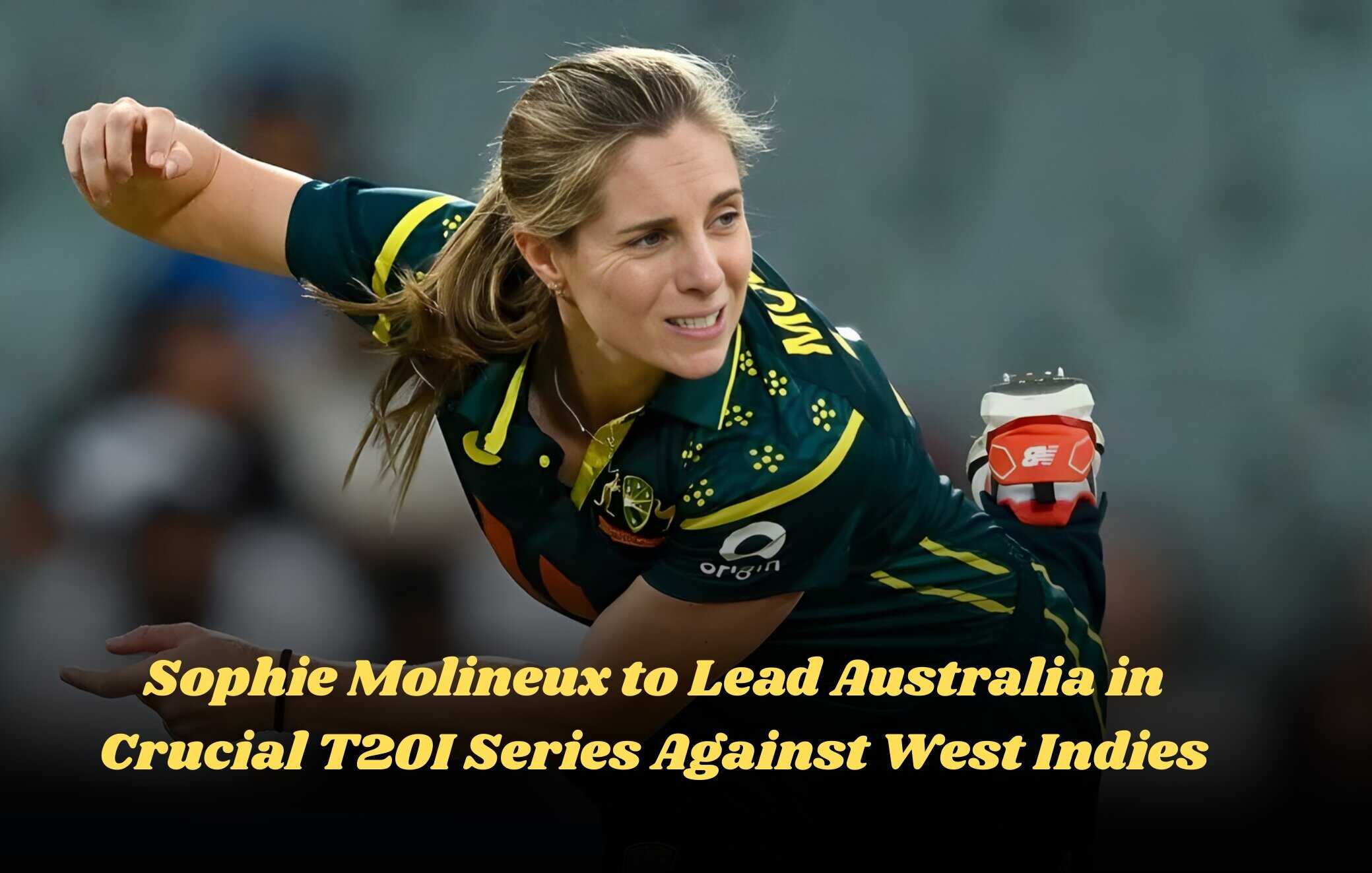
Sophie Molineux Confirms Captaincy Despite Back Injury
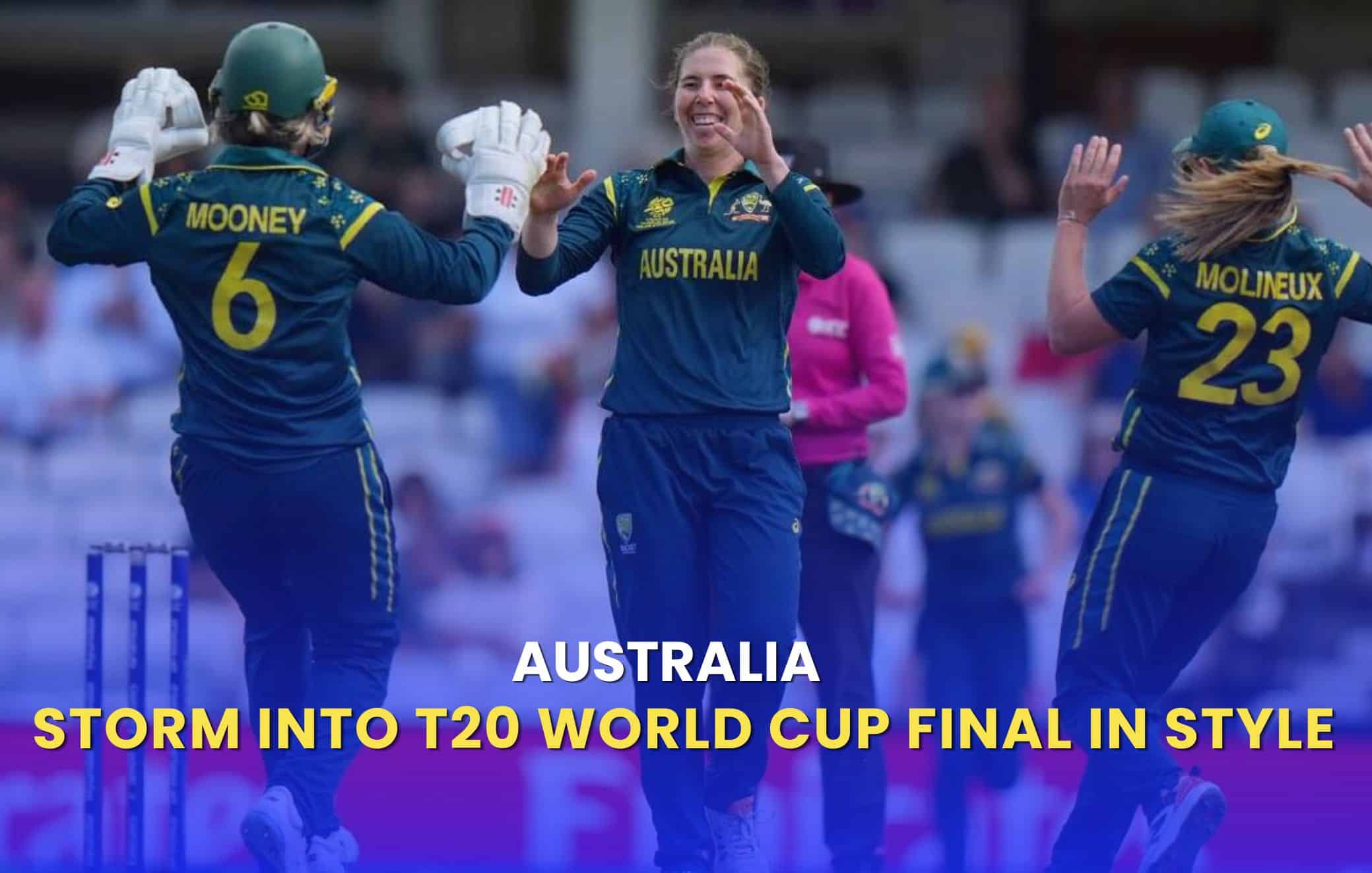
Sophie Molineux will lead Australia through their upcoming three-match T20I series against the West Indies in St Vincent, demonstrating the trust placed in her leadership despite a lingering back injury. The 28-year-old all-rounder was unavailable for Australia’s final two ODIs and the Test against India, but selectors and coaching staff have made her availability a priority as the team prepares for the ICC Women’s T20 World Cup 2026 in England. Her presence offers both tactical stability and strategic insight, giving the team a reliable figure to manage on-field decisions while mentoring younger players.
Even while limited in bowling, Molineux has remained fully engaged in batting sessions and fielding drills, showing her commitment to maintaining fitness and form. The coaching staff has outlined a phased plan to manage her workload, allowing her to focus on leadership and batting initially before integrating bowling duties as fitness allows. This careful management highlights her value beyond pure performance- her strategic awareness, ability to read game situations, and influence over team morale are all critical components of Australia’s preparation.
Her captaincy comes at a pivotal moment, with the team keen to refine combinations and tactical approaches under high-pressure T20 conditions. Molineux’s leadership ensures continuity and guidance for the squad, offering a stabilizing presence that allows both experienced players and emerging talent to perform confidently.
Building Team Cohesion Under Sophie Molineux
The Australian squad convened for their first full training session at Arnos Vale Stadium in St Vincent, emphasizing tactical drills, high-pressure simulations, and net sessions tailored to replicate match intensity. Key players, including Kim Garth and Ellyse Perry, returned to full fitness, providing depth in batting and bowling. For Sophie Molineux, these sessions are an opportunity to embed her leadership style and influence team dynamics. The focus is on communication, adaptability, and maintaining high energy levels throughout sessions.
Molineux has stressed the importance of reconnecting with teammates after a period of intense competition in domestic and international cricket. Touring together allows the squad to develop cohesion, establish clear player roles, and refine communication on and off the field. This is especially critical in T20 cricket, where rapid tactical adjustments and real-time coordination can determine outcomes. Molineux’s role is both formal and intangible: she sets behavioral standards, models resilience, and ensures the squad maintains focus under fatigue and pressure.
Beyond technical training, Molineux is fostering a culture of mentorship. Emerging talents such as Darcie Brown and Georgia Redmayne are being integrated with seasoned campaigners to balance innovation and stability. By guiding younger players in situational awareness, shot selection, and field placement, Molineux is creating a squad capable of executing complex strategies while remaining adaptable.
Tactical Flexibility and Sophie Molineux’s On-Field Influence
Australia faces a unique tactical challenge against the West Indies, a team that combines aggressive batting with unpredictable bowling variations. Former WBBL teammate Hayley Matthews adds an element of familiarity, giving Australia an opportunity to test counter-strategies against high-caliber opposition. Sophie Molineux’s influence in these scenarios is pivotal. She will orchestrate field settings, rotate bowlers effectively, and manage over allocation, ensuring the team remains tactically versatile.
Leadership in T20 cricket extends beyond traditional captaincy duties. Molineux is responsible for maintaining match tempo, adapting strategies to exploit opposition weaknesses, and communicating real-time adjustments to players under pressure. Her decisions around attacking fields, bowler matchups, and batting order tweaks will directly impact Australia’s ability to seize momentum. Coaching staff have emphasized that flexibility, rather than rigid adherence to pre-planned roles, will be crucial in this series.
The blend of experience and emerging talent in the squad allows Molineux to experiment with formations and combinations while ensuring competitive performance. Players such as Tahlia McGrath, with her all-round skills, and experienced campaigners like Perry, provide versatility that aligns with Molineux’s dynamic leadership approach. This integration of tactical flexibility and player development is designed to optimize performance across both immediate T20I outcomes and longer-term World Cup readiness.
Managing Physical Demands: Injury and Workload
Sophie Molineux’s back injury has required careful monitoring to prevent flare-ups that could compromise performance. The coaching team has implemented a progressive workload plan, focusing on controlled batting, selective net sessions, and mobility exercises designed to maintain strength without overtaxing her recovery. By managing intensity and prioritizing her role in leadership and batting, the team ensures she remains central to preparation while minimizing injury risk.
Physical readiness is paired with mental preparation. Molineux engages in visualization exercises, scenario planning, and match simulations to refine decision-making under pressure. Her ability to stay mentally sharp while managing physical limitations reinforces her value, ensuring she can influence matches without requiring full all-round exertion. This dual approach: balancing health management with tactical engagement demonstrates her professionalism and strategic mindset as captain.
Sophie Molineux Shapes Australia’s Tactical Approach
Sophie Molineux’s influence extends beyond individual performance into the strategic architecture of Australia’s T20I team. Her understanding of field placements, bowling rotations, and batting order sequencing allows the squad to execute highly disciplined game plans. Against the West Indies, whose aggressive batting lineup presents both challenges and opportunities, Sophie Molineux’s leadership ensures Australia can control tempo and momentum while remaining flexible to exploit opposition vulnerabilities.
Her decisions in real time from adjusting bowler assignments to recalibrating batting tactics underscore her dual role as both leader and strategist. By blending instinct, experience, and analytical assessment of the opposition, Molineux maximizes the team’s strengths while mitigating risk. This approach ensures that emerging players are integrated seamlessly and that the squad can pivot when unexpected situations arise which is a hallmark of high-level T20 cricket leadership.
Sophie Molineux’s Mentorship Elevates Emerging Talent
One of Molineux’s key contributions to the squad is her mentorship of younger players. Athletes such as Darcie Brown and Georgia Redmayne have benefitted from her guidance in high-pressure scenarios including match simulations and live net sessions. Molineux emphasizes situational awareness, decision-making under duress, and tactical execution, fostering an environment where emerging talent can thrive alongside experienced campaigners.
This mentorship extends to practical guidance on bowling strategies, batting shot selection, and fielding positioning. By sharing insights from her international experience, Molineux provides a framework that allows new players to develop confidence and adaptability. Her coaching in situ helps prepare the squad for diverse conditions and opposition tactics, ensuring Australia enters the series and upcoming World Cup with a cohesive battle-tested team.
West Indies Analysis Under Sophie Molineux’s Leadership
The West Indies team poses both familiarity and challenge. Players like Hayley Matthews and Stafanie Taylor offer aggressive top-order firepower requiring Australia to execute disciplined bowling plans and adaptive fielding strategies. Sophie Molineux has been central to this analysis helping to determine optimal bowling sequences, field placements, and batting orders tailored to counter West Indies strengths.
Her leadership ensures the team maintains composure even when the Caribbean side applies sustained pressure. By proactively anticipating opposition adjustments, Molineux allows Australia to stay ahead tactically, creating scoring opportunities while minimizing vulnerabilities. Her insight ensures that every decision from bowling rotations to batting partnerships contributes to controlling the rhythm of the match.
Physical and Mental Management for Peak Performance
Managing Sophie Molineux’s back injury has required a sophisticated combination of physical care and mental conditioning. Her training regime emphasizes mobility, core strength, and selective match-intensity sessions, preserving energy for crucial moments. Additionally, mental preparation including scenario visualization, pressure simulation, and communication strategy is integral to her captaincy.
This dual approach allows Sophie Molineux to maintain tactical leadership even when not contributing fully as a bowler. Her mental resilience and strategic clarity enable her to make informed decisions that impact match outcomes while also supporting teammates in adapting to dynamic situations. By balancing recovery with engagement, she ensures that both her physical health and leadership effectiveness remain optimized throughout the series.
Sophie Molineux Sets the Tone for World Cup Readiness
The St Vincent T20I series functions as a vital platform for World Cup preparation. Sophie Molineux’s leadership is central to aligning the squad with Australia’s intended high-intensity playing style. Every fielding drill, batting simulation, and tactical discussion reinforces cohesion and ensures players are conditioned to execute strategies effectively under pressure.
Her captaincy emphasizes communication, adaptability, and strategic foresight, all crucial attributes for navigating the rapid pace of T20 World Cup matches. By embedding these principles during the series, Molineux ensures the squad not only competes effectively against the West Indies but also builds a foundation for consistent performance at the global stage.
Integration of Leadership, Performance, and Tactical Insight
Sophie Molineux’s role in the squad extends beyond statistical contribution. Her leadership manifests in orchestrating fielding structures, mentoring emerging players, guiding strategic decisions, and maintaining composure under pressure. By integrating leadership, performance, and tactical insight, she elevates the team’s collective capability.
Each decision whether rotating bowlers, adjusting batting strategies, or motivating players mid-innings reflects her understanding of high-level cricket dynamics. Her influence ensures that Australia’s squad is not only prepared for immediate series success but also positioned for sustained achievement at the T20 World Cup 2026.
The Long-Term Impact of Sophie Molineux’s Leadership
Sophie Molineux’s captaincy in this T20I series exemplifies how transformative leadership can extend far beyond immediate match outcomes, influencing every layer of team culture and performance. Her approach to guiding Australia integrates tactical intelligence, emotional awareness, and strategic foresight, creating an environment where players feel supported while being challenged to operate at their highest potential. Emerging talent in the squad, including fast-rising stars such as Darcie Brown and Georgia Redmayne, benefit from her mentorship, learning to read game situations, make split-second decisions under pressure, and develop the composure necessary for international cricket.
For these younger players, observing Molineux’s preparation routines, field adjustments, and in-game decision-making provides a practical framework for understanding leadership in action. The lessons gained are not theoretical; they are embedded in live match scenarios, offering invaluable experience that accelerates their professional growth.
For seasoned players, Sophie Molineux’s leadership fosters cohesion and clarity of roles. Experienced campaigners such as Ellyse Perry and Kim Garth gain reassurance from a captain who can articulate game plans effectively, manage bowling rotations thoughtfully, and maintain team morale even in high-pressure situations. Her capacity to combine strategic analysis with situational flexibility ensures that the squad functions as a cohesive unit, capable of responding to unexpected challenges such as shifts in pitch conditions, sudden momentum swings, or opposition tactical adjustments.
This cohesion is crucial in T20 cricket, where the margin for error is minimal and the game can pivot on a single over or individual performance. Molineux’s influence therefore extends to the psychological and relational dynamics of the team, reinforcing trust, mutual accountability, and clarity across all squad members.
Molineux’s leadership philosophy balances flexibility with structure. She recognizes that high-performance environments demand both consistency and adaptability. By maintaining clear expectations while allowing players autonomy in their approach, she ensures that the team can execute strategies efficiently without stifling creativity. This balance is particularly critical in short-format cricket, where split-second innovation can turn matches and where rigid tactical adherence may limit a team’s responsiveness. Her leadership cultivates a culture where players feel empowered to take calculated risks, contribute unique strengths, and support one another under the pressures of tournament play.
Strategic preparation under Sophie Molineux’s guidance has been meticulous. She invests considerable effort in analyzing opposition tendencies, assessing fielding positions, evaluating player form, and identifying scoring patterns. Her attention to detail extends to planning for conditions specific to St Vincent, accounting for pitch behavior, wind patterns, and historical match trends. By embedding these insights into team briefings and drills, she ensures the squad enters matches with a shared understanding of objectives, potential scenarios, and optimal responses. This proactive planning enhances decision-making in real time, allowing the team to maintain momentum, manage risk, and exploit tactical opportunities effectively.
Communication is another cornerstone of Molineux’s long-term impact. On the field, she constantly interacts with bowlers, batters, and fielders to align understanding, provide guidance, and reinforce strategies. Off the field, she fosters dialogue that encourages reflection, feedback, and shared learning. This continuous exchange strengthens team culture, enhances collective intelligence, and ensures that lessons from each match contribute to ongoing improvement. Players internalize these habits, which carry over into future competitions, elevating not only current performance but also sustaining the squad’s development over time.
Sophie Molineux and Australia’s Pursuit of Excellence
Ultimately, Sophie Molineux embodies the intersection of leadership, performance, and strategic acumen. Her ability to guide the team, integrate emerging talent, and adapt tactics under pressure establishes Australia as a dominant, disciplined, and tactically versatile squad. The St Vincent series serves as both a proving ground and a rehearsal for the global stage and Molineux’s influence ensures the team is equipped to execute strategies effectively, respond to challenges dynamically, and maintain consistent performance under T20 pressure.
By blending physical resilience, mental preparation, and tactical intelligence, Sophie Molineux elevates Australia’s potential across every facet of the game. Her leadership guarantees that the squad enters the T20 World Cup with clarity, confidence, and cohesion ready to compete for the highest honors in women’s cricket.
Sophie Molineux Redefines Leadership and Sets the Standard for Australian Women’s Cricket
Sophie Molineux’s role in the Australian squad extends far beyond conventional measures of captaincy or on-field performance. While statistics such as runs scored, overs bowled, or catches taken capture tangible contributions, her influence permeates the psychological and structural fabric of the team. In a sport increasingly defined by high-intensity scenarios and rapid strategic shifts, Molineux embodies a model of leadership that is both adaptive and anticipatory, a captain whose decisions ripple across every facet of team dynamics. Her presence provides a stabilizing anchor, particularly in T20 cricket where momentum swings can be decisive, and she ensures that the squad maintains focus, discipline, and clarity amid the inherent volatility of short-format competition.
Beyond immediate match tactics, Molineux’s leadership sets a cultural precedent within the Australian setup. Younger players are observing and internalizing the way she balances competitive aggression with strategic patience. Emerging talents such as Darcie Brown, Georgia Redmayne, and others are not only learning technical skills under her guidance but are also absorbing a philosophy of situational awareness and mental fortitude. By demonstrating calm under pressure, precision in communication, and decisiveness in tactical calls, Molineux provides a blueprint for what it means to be a complete athlete in a modern international context. Her mentorship encourages players to embrace responsibility early, fostering a generation of cricketers capable of contributing meaningfully in high-stakes scenarios and across multiple formats.
Molineux’s impact also highlights the interconnection between physical management and leadership efficacy. Navigating a back injury while fulfilling the demands of captaincy requires meticulous planning, self-awareness, and an ability to delegate effectively. By modulating her involvement in bowling and match activity without compromising strategic direction, she underscores that leadership is not a function of constant personal exertion but of thoughtful orchestration. Her approach ensures that her decision-making remains sharp, her players feel supported, and the team’s long-term performance trajectory is safeguarded. In this way, Molineux exemplifies a holistic understanding of leadership where personal management, team welfare, and tactical execution converge.
Looking ahead, Molineux’s influence on the upcoming ICC Women’s T20 World Cup 2026 is poised to be transformative. The St Vincent series is a proving ground, allowing her to refine team combinations, test strategic variations, and embed a rhythm that will be critical against top-tier global opponents. Her emphasis on communication, adaptability, and analytical observation equips the squad to respond dynamically to the pressures of tournament cricket, where the margin for error is minimal and the need for cohesive execution is paramount. Molineux’s capacity to align individual brilliance with collective strategy ensures that Australia can compete not just through talent but through cohesion, intelligence, and relentless preparation.
Ultimately, Sophie Molineux’s leadership is redefining what it means to guide a modern cricket team. She represents a synthesis of technical skill, mental resilience, and strategic foresight that elevates the squad beyond individual contributions. Her approach cultivates confidence, instills structure, and empowers players to perform at their peak while maintaining clarity of purpose. Beyond the immediate outcomes of the T20I series against the West Indies, her influence establishes a lasting framework for Australian women’s cricket, one in which leadership, mentorship, and tactical acumen are inseparable from the pursuit of excellence. In Molineux, Australia possesses not just a captain but a visionary leader whose impact will resonate across matches, tournaments, and the broader evolution of the game.
🔗 Visit our other platforms:
8jjSports.com