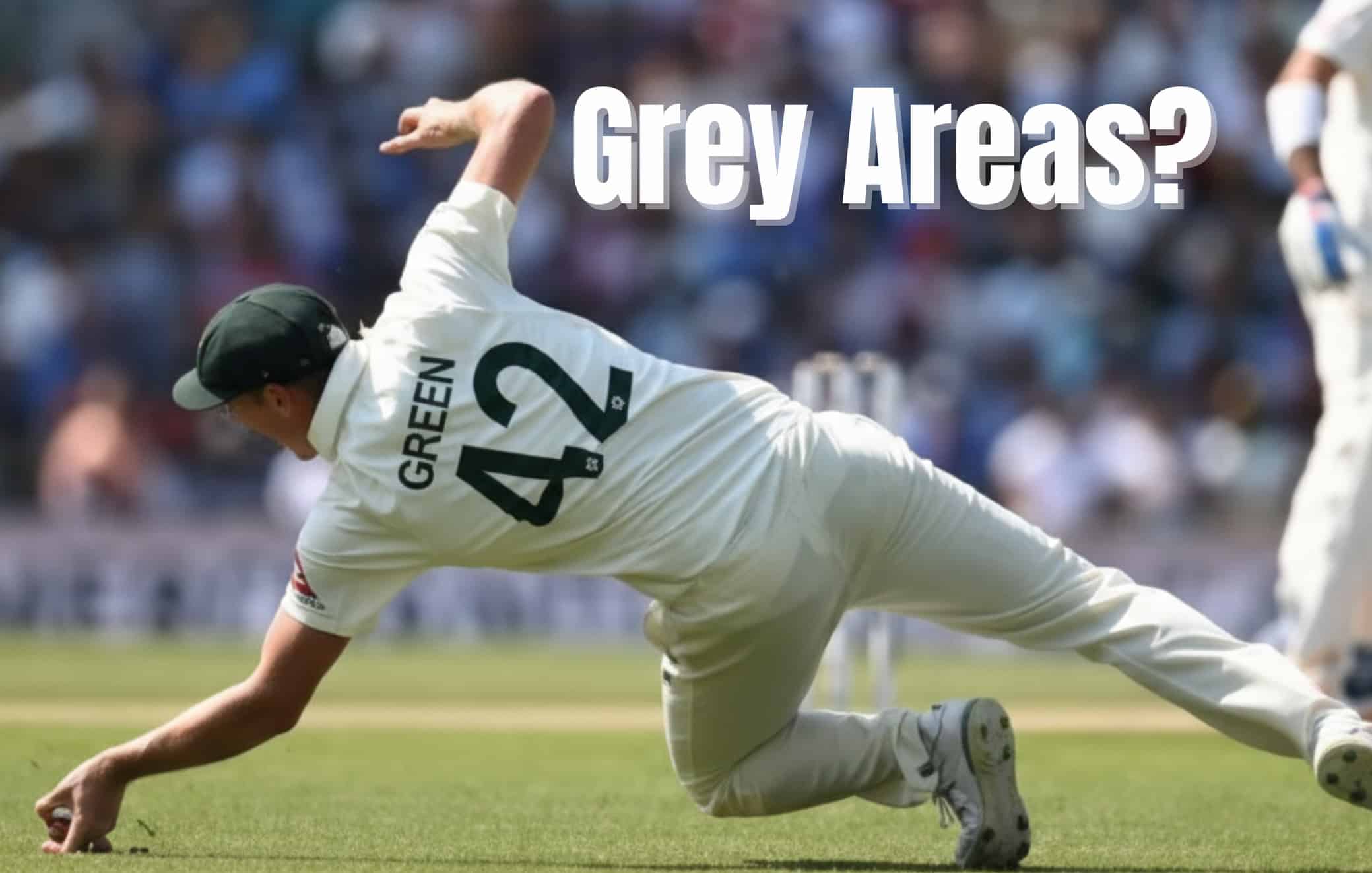
Cricket catches have long been a source of debate, especially when technology and ethics intersect. A recurring question is whether a ball grazing grass before entering a fielder’s hands still counts as a legitimate catch. These grey areas generate discussion, controversy, and “talking points” in the game.
Grey Areas in Sport and Cricket
Grey areas exist in all sports. In football, offside, handball, and deflections create debate. Rugby has complex rucks and mauls. Cricket, while more rule-driven, still faces contentious situations. Catches that may touch the ground or grass, and subjective LBW or walking decisions, remain central examples.
Technology’s Role in Resolving Uncertainty
Cricket has embraced technology, such as DRS, Hawk-Eye, and ultra-motion cameras, to reduce human error. However, some incidents, like a ball grazing grass before a fielder catches it, are difficult to judge. Even high-resolution 3D models may not always provide absolute certainty.
Ethics Versus Adjudication
Many grey areas in cricket are ethical, not just technical. Walking, Mankading, and marginal catches challenge players’ honesty and umpires’ perception. The famous Mike Brearley decision to recall Geoff Cope exemplifies sportsmanship overriding strict adjudication. Similarly, Alex Hales’ controversial catch at The Oval illustrates how catches are both an ethical and technological issue.
Human Limitations and Perception
Umpires operate under constraints: eye position, shadows, and speed of the ball affect judgments. Even with TV replays, low-angle catches or slight contact with grass create uncertainty. The soft signal, where on-field calls are supported but not overridden, demonstrates the balance between technology and human judgment.
Future Possibilities
Speculation abounds about future technology: holographic glasses to visualize batsman stance, laser-assisted no-ball detection, and flashing boundary markers. While these tools may reduce error, the human element—intention, reaction time, and judgment—remains central.
The Continuing Debate
Whether a ball brushing grass is a valid catch may never be definitively settled. Cricket’s combination of ethics, technology, and human judgment ensures the game’s grey areas persist. Fans, players, and officials continue to debate, reflecting both the sport’s complexity and its enduring appeal.
Cricket’s grey zones, from catches to intent-based decisions like shot attempts or LBWs, highlight the game’s subtle balance between rules, ethics, and perception. As technology evolves, some uncertainties may be reduced, but the discussion and controversies will likely continue, enriching the sport’s narrative.
🔗 Visit our other platforms:
8jjSports.com