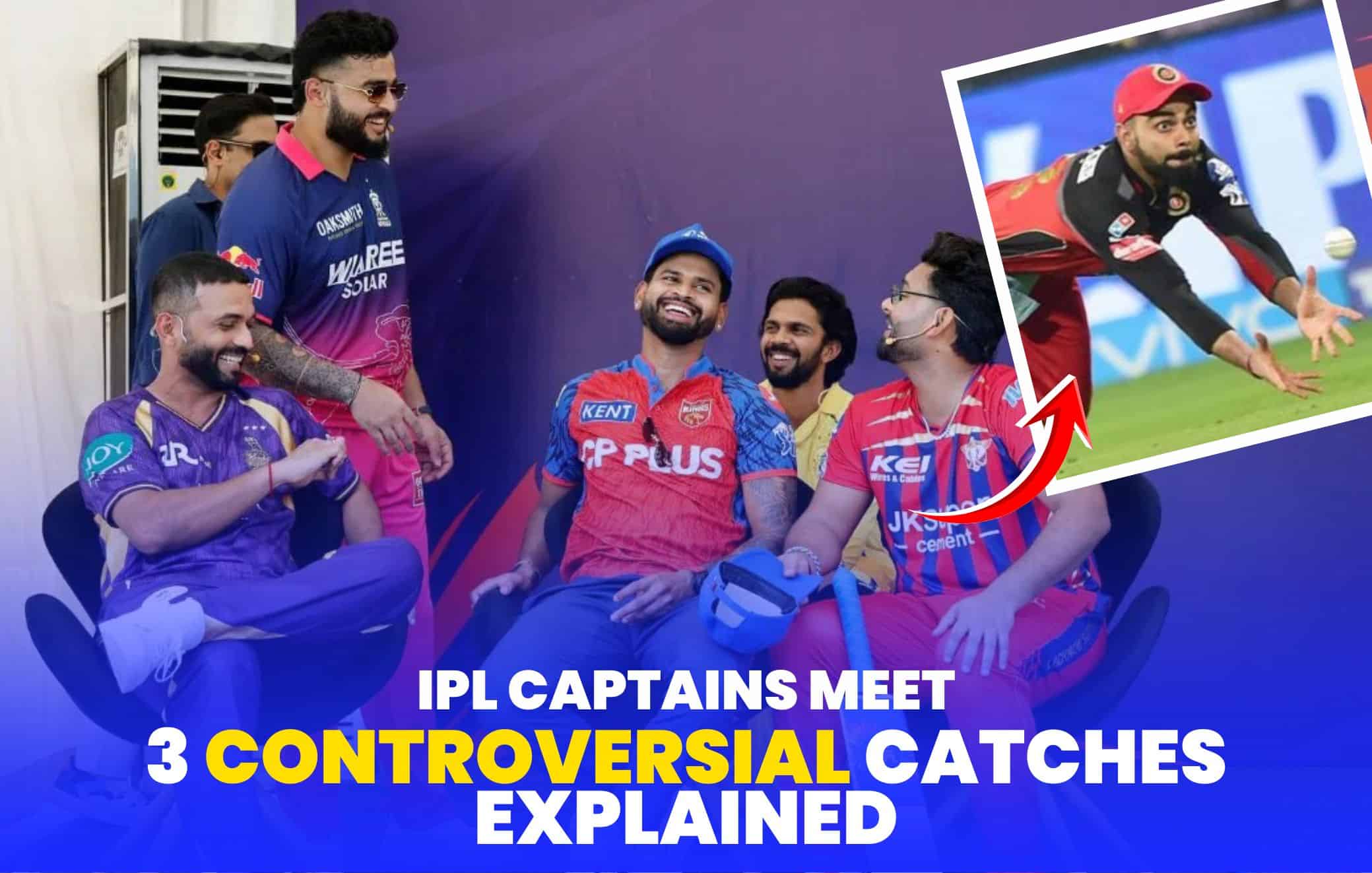
IPL captains meet discussions have brought major attention to controversial dismissals involving incomplete catches, with the BCCI clarifying how “complete control” should be interpreted under cricket laws. The IPL captains meet featured detailed video analysis of past incidents, including dismissals of Angelo Mathews, Roston Chase, and Ayush Badoni, sparking debate about umpiring consistency and match-defining decisions. These examples have now become central to understanding how catches should be judged moving forward.
IPL captains meet highlights BCCI’s stance on incomplete catches
The IPL captains meet served as an important platform for the BCCI to educate team leaders about the correct interpretation of catching rules. Officials emphasized that a catch is only valid if the fielder demonstrates full control over both the ball and their body movement. This clarification at the IPL captains meet aims to eliminate confusion and ensure consistent decisions across matches.
Through video examples, the BCCI highlighted how several past dismissals did not meet the criteria of “complete control.” These instances showed fielders releasing the ball while still off balance, raising doubts about whether the catch had been fully completed. The IPL captains meet reinforced that such dismissals should be ruled not out under current interpretations.
Angelo Mathews dismissal revisited at IPL captains meet
One of the most discussed examples at the captains meet was Angelo Mathews’ dismissal during a Test match against Australia in Galle. Mathews, who was batting confidently, attempted a sweep shot and was caught by Beau Webster in a tumbling effort. While the catch appeared clean at first glance, the IPL captains meet analysis revealed that the fielder was not fully in control of his movement when releasing the ball.
According to BCCI experts at the captains meet, the correct decision should have been not out. The moment highlighted how even visually impressive catches can fail to meet the technical requirements of the law. This case also showed how such decisions can influence match outcomes, as Sri Lanka went on to lose the Test and the series.
Roston Chase controversy explained in IPL captains meet
The IPL captains meet also revisited the dismissal of Roston Chase during a T20I against Bangladesh. Chase was given out after a catch taken by Mahedi Hasan, but the decision raised immediate doubts regarding control and balance.
During the IPL captains meet, experts concluded that the fielder did not have full control over his movement when the ball was released. This meant the catch should not have been considered complete. The dismissal proved costly for West Indies, as Chase was out for a duck and the team suffered a heavy defeat.
This example presented at the IPL captains meet highlighted the importance of interpreting subtle movements correctly. Even minor imbalance or premature release can change the validity of a catch, making umpire judgment crucial.
Ayush Badoni dismissal sparks debate at IPL captains meet
Another key example discussed at the captains meet was Ayush Badoni’s dismissal in an IPL match between Lucknow Super Giants and Sunrisers Hyderabad. Badoni was declared out after a diving catch by Harshal Patel, which was initially praised as a brilliant effort.
However, the IPL captains meet analysis revealed that the fielder was not in complete control while finishing the catch. The BCCI experts ruled that the dismissal should have been not out, adding another controversial case to the list.
Fortunately for Lucknow Super Giants, the decision did not affect the final result, as they went on to win the match. Still, the incident remains a strong example discussed during the IPL captains meet of how incorrect interpretations can occur even in high-profile games.
Understanding “complete control” in cricket catches
A major takeaway from the captains meet was the clarification of the “complete control” rule. According to the match playing conditions, a catch is only valid if the fielder maintains control of both the ball and their movement until the action is fully complete.
The IPL captains meet emphasized that simply grabbing the ball is not enough. Fielders must demonstrate stability and control throughout the catching motion. If the ball is released prematurely or the fielder loses balance, the catch cannot be considered valid.
This interpretation aims to ensure fairness and consistency, particularly in fast-paced formats like T20 cricket where such moments often decide matches. The IPL captains meet played a key role in reinforcing this understanding among players and team management.
Impact of umpiring interpretation highlighted
Another important discussion point at the captains meet was the variation in umpiring decisions. The same type of catch has been judged differently in different matches, leading to confusion among players and fans.
By presenting multiple examples, the IPL captains meet demonstrated how interpretations can vary between umpires and referees. This inconsistency has been a concern, especially in crucial match situations where a single decision can alter the outcome.
The BCCI’s effort at the IPL captains meet is aimed at reducing such inconsistencies by standardizing interpretations and providing clearer guidelines for match officials.
Additional examples support BCCI’s interpretation
The IPL captains meet also included examples where catches were correctly judged as fair. These cases, from international matches involving teams like New Zealand and South Africa, showed situations where fielders maintained complete control throughout the catching process.
By comparing valid and invalid catches, the IPL captains meet provided a clearer understanding of the rule. This balanced approach ensures that players and captains can better interpret decisions during live matches.
Lessons for IPL captains and teams
The IPL captains meet served as a crucial learning session for team leaders ahead of the new season. Captains were reminded to be cautious about premature celebrations and to rely on umpire decisions rather than assumptions.
For players, the IPL captains meet highlighted the importance of technique while taking catches. Maintaining balance, securing the ball, and completing the motion properly are now more important than ever. Teams are expected to incorporate these lessons into their training and match strategies.
Conclusion: IPL captains meet sets new clarity standard
The IPL captains meet has brought much-needed clarity to one of cricket’s most debated aspects—catching rules. By revisiting controversial dismissals involving Angelo Mathews, Roston Chase, and Ayush Badoni, the BCCI has reinforced the importance of complete control in judging catches.
As the IPL season approaches, the lessons from the IPL captains meet are expected to improve consistency in umpiring decisions and reduce controversies. With clearer guidelines in place, players, captains, and officials can approach matches with a better understanding of the rules, ensuring fairer outcomes and maintaining the integrity of the game.
Written by 8JJ.com | March 27, 2026
Stay updated with 8JJ for Real-Time Sports Scores & Sports Related Updates
🔗 Visit our other platforms:
8jjSports.com